Freqency Specific Microcurrent (FSM) Therapy
What is it?
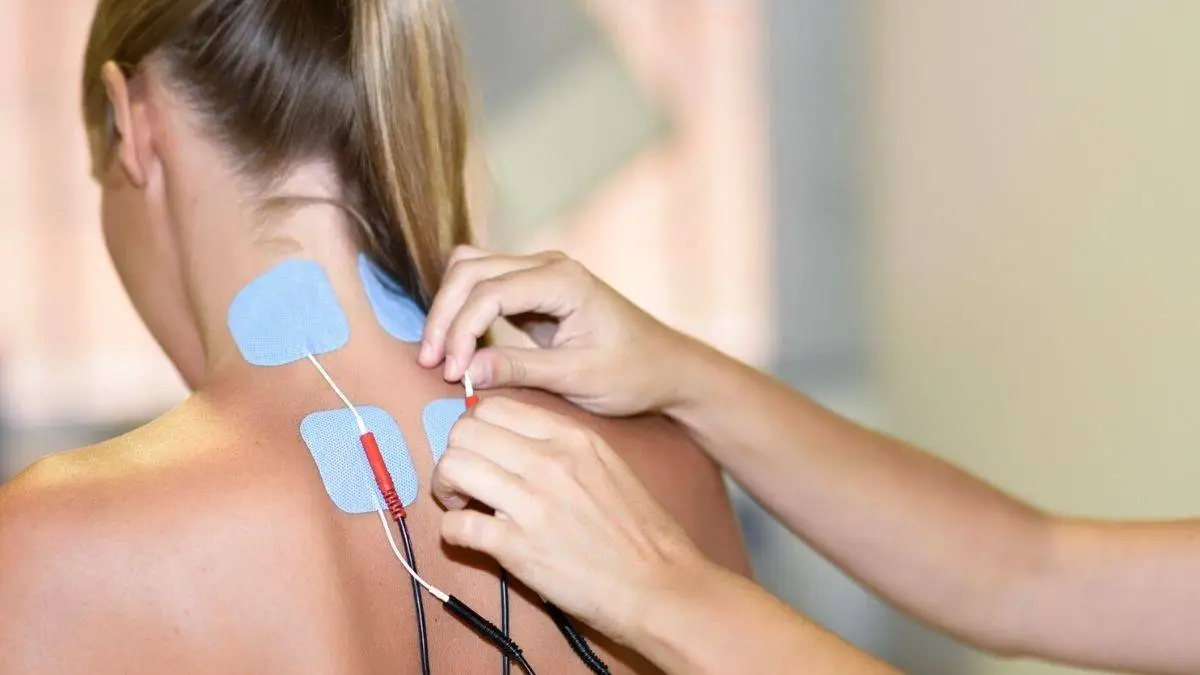
A form of electrotherapy that applies pairs of specific low-frequency electrical currents (typically in the microampere range, less than 1mA) to the body, with the premise that different frequency combinations target particular tissues or conditions. The therapy involves delivering sub-sensory electrical currents through various application methods including conductive graphite gloves, moistened towels, or gel electrode patches placed on the skin. These currents are of similar magnitude to endogenous electrical currents generated by the human body.
It is theorized to work through several physiological mechanisms: 1) Enhanced Cellular metabolism: increased ATP re-synthesis, and maintenance of intracellular calcium homeostasis. 2) Tissue effects: activation of MAPK signaling pathways and release of transforming growth factor beta 1 (TGF-B1), which promote cell proliferation and migration. 3) Neuromuscular modulation: potential effects on muscle tone through mechanisms related to the gamma-loop hypothesis, resulting in observable tissue softening and warming.
Clinical applications.
The most common conditions treated with FSMT include chronic pain syndromes, musculoskeletal disorders, and wound healing applications. Based on the available clinical literature, FSM has been studied and applied for: Knee osteoarthritis, Knee pain, Low back pain, Neck pain, Masticatory muscle pain and TMJ disorders, Fibromyalgia, Systemic sclerosis, Raynauds, Diabetic foot ulcers, venous ulcers, pressure ulcers.
Research Reference
(https://pubmed.ncbi.nlm.nih.gov/22775307)
(https://pubmed.ncbi.nlm.nih.gov/36399190)
(https://pubmed.ncbi.nlm.nih.gov/32825091)
(https://pubmed.ncbi.nlm.nih.gov/29738296)
(https://pubmed.ncbi.nlm.nih.gov/18165202)
(https://pubmed.ncbi.nlm.nih.gov/32293810)
(https://pubmed.ncbi.nlm.nih.gov/33095658)
(https://pubmed.ncbi.nlm.nih.gov/19542797)
Photobiomodulation (PBM) Therapy
What is it?
A form of phototherapy that uses red or near-infrared light (typically 600-1100 nm wavelength) at low power densities to modulate cellular and tissue physiology without generating significant heat. Also know as Cold laser or Low-level laser (LLLT) therapy, it is a non-invasive treatment modality used for pain relief, wound healing, inflammation reduction, and tissue repair.
Clinical applications & Contraindications:
LLLT can be used to treat acute and chronic musculoskeletal pain, osteoarthritis, neck pain, wound healing, and inflammatory conditions. LLLT has demonstrated efficacy across a broad range of conditions, supported by randomized controlled trials. LLLT generates no destructive heat or thermal effects, distinguishing it from surgical laser applications. Post-surgical pain is an emerging area of application.
There are no absolute contraindications established for LLLT in chronic pain or wound healing, but caution is advised in areas of known or suspected malignancy due to potential for enhanced tumor cell proliferation. Relative contraindications include pregnancy, application over thyroid tissue, and in patients with photosensitivity disorders (theoretical)
Research References:
(https://pubmed.ncbi.nlm.nih.gov/28987080)
(https://pubmed.ncbi.nlm.nih.gov/22045511)
(https://pubmed.ncbi.nlm.nih.gov/19913903)
(https://pubmed.ncbi.nlm.nih.gov/24049929)
Extracorporeal Shockwave (ESW) Therapy
What is it?
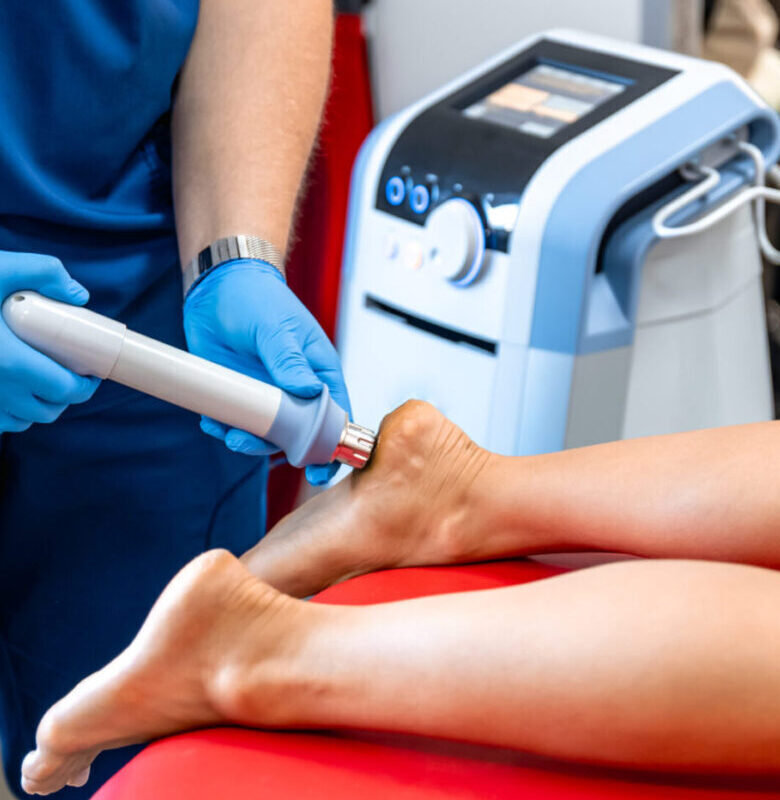
A non-invasive treatment modality that delivers high-energy acoustic waves through the skin, into the tissue, to promote healing and regeneration.
Clinical applications & Contraindications
Treatment spans diverse musculoskeletal conditions with success rates of 65-91% and include tendinopathies (plantar fasciitis, lateral epicondylitis, calcific shoulder, patellar), bone healing disorders (delayed unions, non-unions, avascular necrosis), osteoarthritis, and wound healing.
Adverse effects are generally mild and transient, including pain during treatment, temporary reddening of the skin, petechiae/bruising, and swelling at the site. Main contraindications include active malignancy in the treatment area, anticoagulation therapy, known coagulopathies, bleeding disorders, pacemaker in the treatment area, and pregnancy.
Exclusions are active infection and open wounds in the treatment area, and generalized rheumatologic or inflammatory arthropathies.
Reearch References
(https://pubmed.ncbi.nlm.nih.gov/24667365)
(https://jamanetwork.com/journals/jamasurgery/fullarticle/10.1001/jamasurg.2024.0625?utm_source=openevidence&utm_medium=referral)
(https://pubmed.ncbi.nlm.nih.gov/31446484)
(https://jamanetwork.com/journals/jama/fullarticle/10.1001/jama.288.11.136?utm_source=openevidence&utm_medium=referral)